
Over the past two years, the term AI agent has appeared in nearly every enterprise technology presentation — from national CTO forums to mid-corp board meetings. Yet conceptual confusion remains a real barrier in the field: many organizations label their chatbot an "AI agent," or assume that an LLM bolted onto RPA is equivalent to a genuinely agentic system.
This confusion is more than a terminology problem. It has direct consequences for investment decisions, system architecture, and outcome expectations. This article builds the conceptual foundation decision-makers need to distinguish these four paradigms with precision.
Chatbots: Rule-Based or LLM-Driven Responders
Chatbots — whether rule-based trees or LLM-powered — operate in a request-response paradigm. The user sends a message; the system replies. Interactions are stateless or semi-stateful within a limited context window. A chatbot's capability is bounded in two ways: it cannot take initiative without an external trigger, and it cannot execute actions beyond producing text.
LLM-powered chatbots, as implemented by many Indonesian companies today, are far more flexible than their rule-based predecessors — capable of understanding context, generating summaries, and answering complex questions. But they remain fundamentally passive: they wait, they respond, and they stop there.
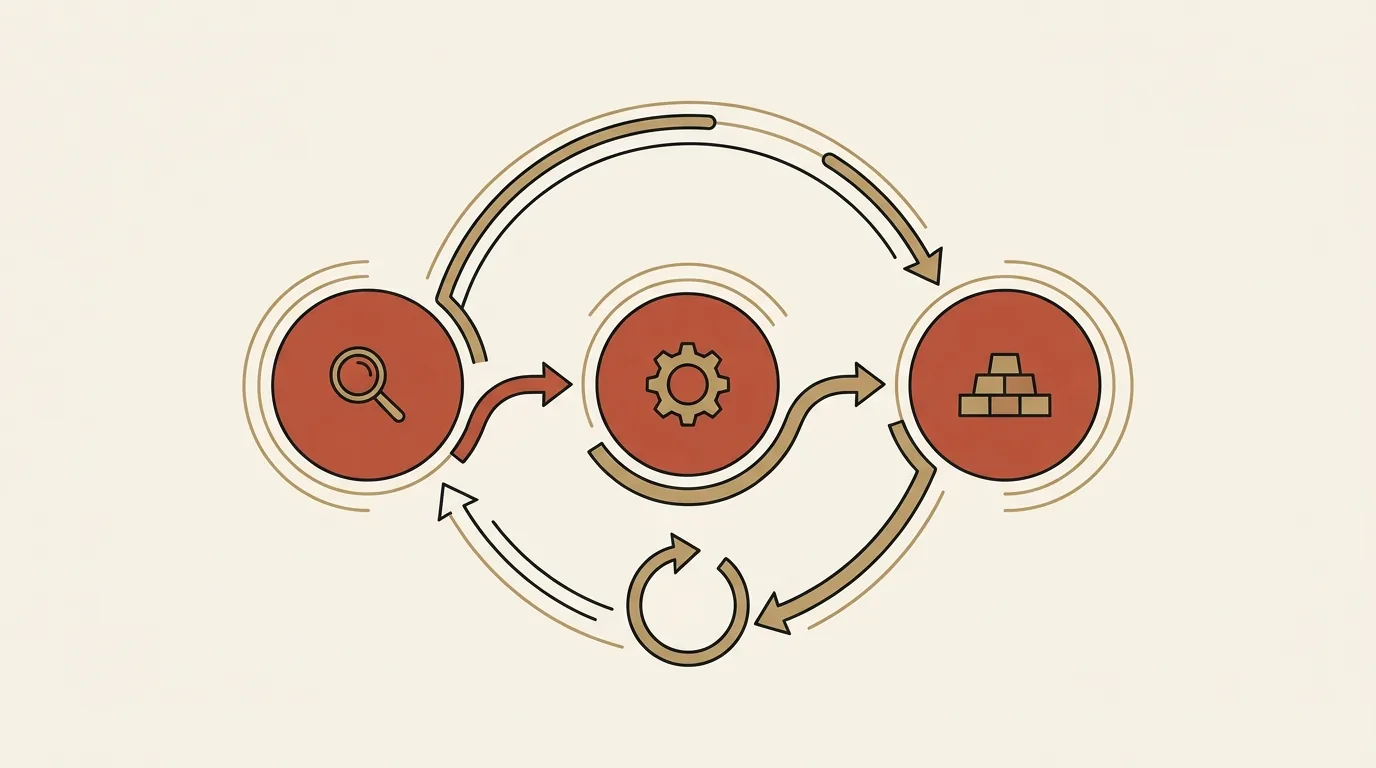
RPA: Deterministic Rule-Based Executors
Robotic Process Automation (RPA) moves in the opposite direction: it is active in execution, but has no contextual understanding capability. RPA follows workflows defined with precision — click button X, pull data from column Y, enter it into system Z. It excels at repetitive, deterministic, high-volume processes.
RPA's fundamental weakness is fragility: even the smallest UI change — a button that shifts position, an added field — can bring an entire automation process to a halt. RPA cannot improvise, cannot handle exceptions, and cannot learn from new patterns.
Traditional Automation: Structured Workflow Connectors
Traditional automation — whether through low-code platforms like Zapier or Make, or custom scripting — connects systems through predefined triggers and actions. Its strength is reliability and transparency: every step is auditable, every condition is predictable. But like RPA, it has no capacity to handle ambiguity or unanticipated situations.
AI Agent: An Autonomous System That Plans and Executes
An AI agent is fundamentally different from all three paradigms above. The difference is not merely one of scale or intelligence — it lies in cognitive architecture. An AI agent has four capabilities that chatbots, RPA, and conventional automation do not possess simultaneously:
- Goal-directed planning: Given a final objective, the agent dynamically constructs a step-by-step plan — rather than following a pre-specified script.
- Tool use: The agent can invoke external tools — APIs, database queries, web search, code execution, email dispatch — as part of completing a task.
- Reasoning loop: The agent evaluates the result of each action, decides the next step based on the output received, and can revise its plan if conditions change.
- Memory and state management: The agent maintains context across extended sessions, accesses both short-term and long-term memory, and makes decisions based on accumulated information.
In short: a chatbot answers, RPA runs a script, automation connects systems — while an AI agent gets work done.
An AI agent is not a smarter chatbot — it is a system that takes action, not merely one that answers.
A Concrete Example: Vendor Onboarding
Consider the vendor onboarding process at a mid-corp. With a chatbot, staff must ask questions one at a time and execute every step manually. With RPA, repetitive form-filling can be automated — but the moment a document arrives in an unexpected format, the process halts. With traditional automation, reminders and notification routing can be set up — but decision-making remains in human hands.
With an AI agent: the legal team states the objective — "process a new vendor onboarding, ensure all compliance documents are complete" — and the agent executes: downloads documents from the vendor portal, extracts key information, verifies against the applicable compliance checklist, identifies gaps, sends notifications to relevant parties, and prepares a decision summary for human approval. All of this without a script defining every step explicitly.
Why This Distinction Matters for Strategic Decisions
Understanding this distinction is not an academic exercise — it has direct implications across three dimensions of strategic decision-making:
- Investment architecture: AI agents require different infrastructure from RPA or chatbots — from observability pipelines to human-in-the-loop governance. Allocating an RPA budget to an agentic project is a costly mistake.
- Output expectations: The ROI of an AI agent is not measured by transaction volume processed (an RPA metric), but by the complexity of tasks resolved autonomously. The wrong metric produces a misleading evaluation.
- Change management: Deploying an AI agent changes human roles more fundamentally than conventional automation. It demands a rethinking of workflows — not merely the digitization of existing processes.
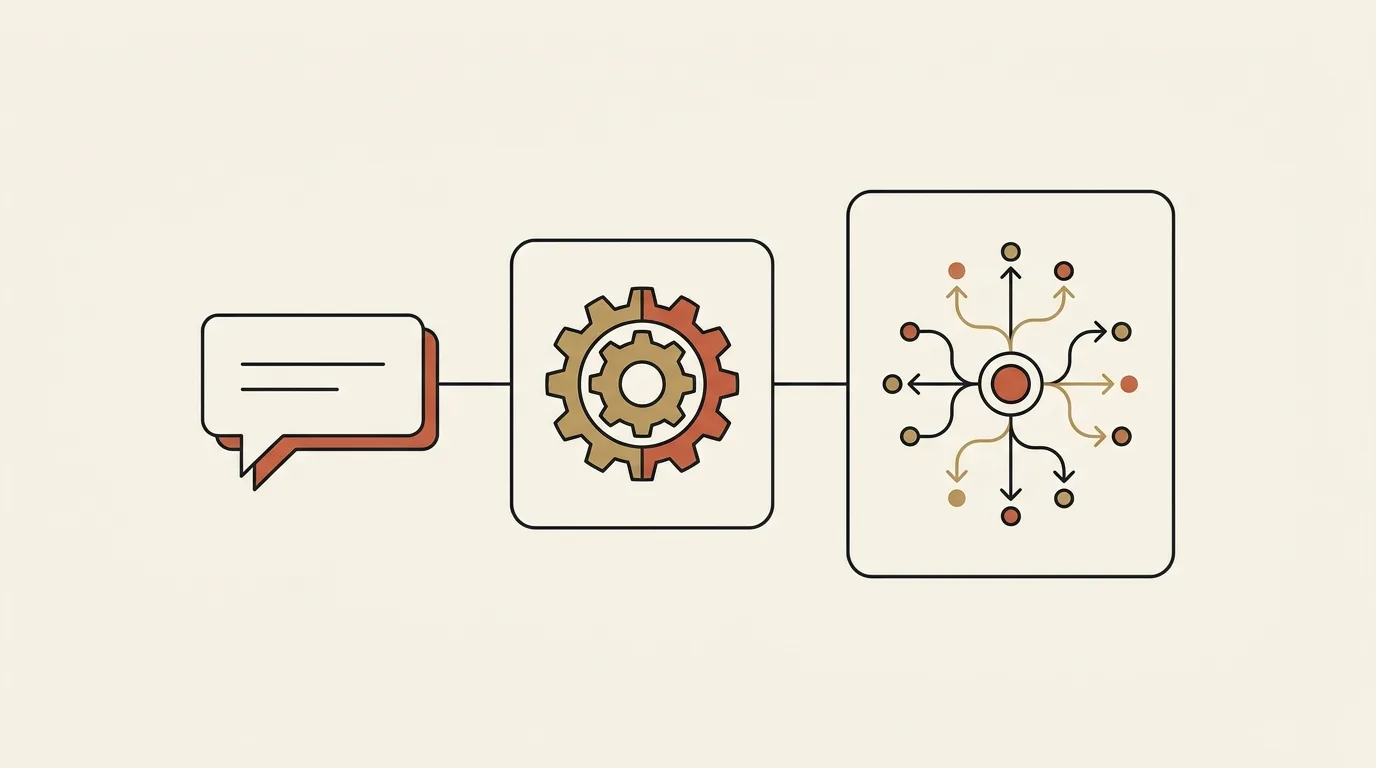
Agentic AI: A Coordinated Multi-Agent System
One level beyond the individual AI agent is agentic AI — an ecosystem in which multiple agents work in a coordinated fashion, each with a distinct specialization and role, under systematic orchestration. This is the paradigm relevant to complex enterprise operations: those where no single agent can handle an entire domain on its own.
In the Indonesian enterprise context, agentic AI becomes relevant for organizations with cross-departmental processes and high decision volume — procurement, compliance monitoring, customer success at scale, or multi-site operations coordination. Not because the technology is new, but because the complexity of enterprise operations in Indonesia genuinely requires more than a single model answering questions.
Questions to Answer Before Choosing a Paradigm
Before committing to an investment in any of these four paradigms, a CTO or IT Director should answer five questions:
- Is the process to be automated deterministic, or does it require handling variation and exceptions?
- Is the expected output text or a recommendation, or is it real action executed in other systems?
- What is the organization's tolerance for autonomy? Is there a governance framework for overseeing agent decisions?
- Does the technical team have the capability to build the observability pipeline required?
- Is the business process sufficiently documented to serve as a foundation for agent workflows?
Answering these questions will determine — more reliably than any vendor pitch or benchmark — which paradigm is right for a specific organizational context. And in many cases, the answer is not one or another, but the right combination of all four.
Topics